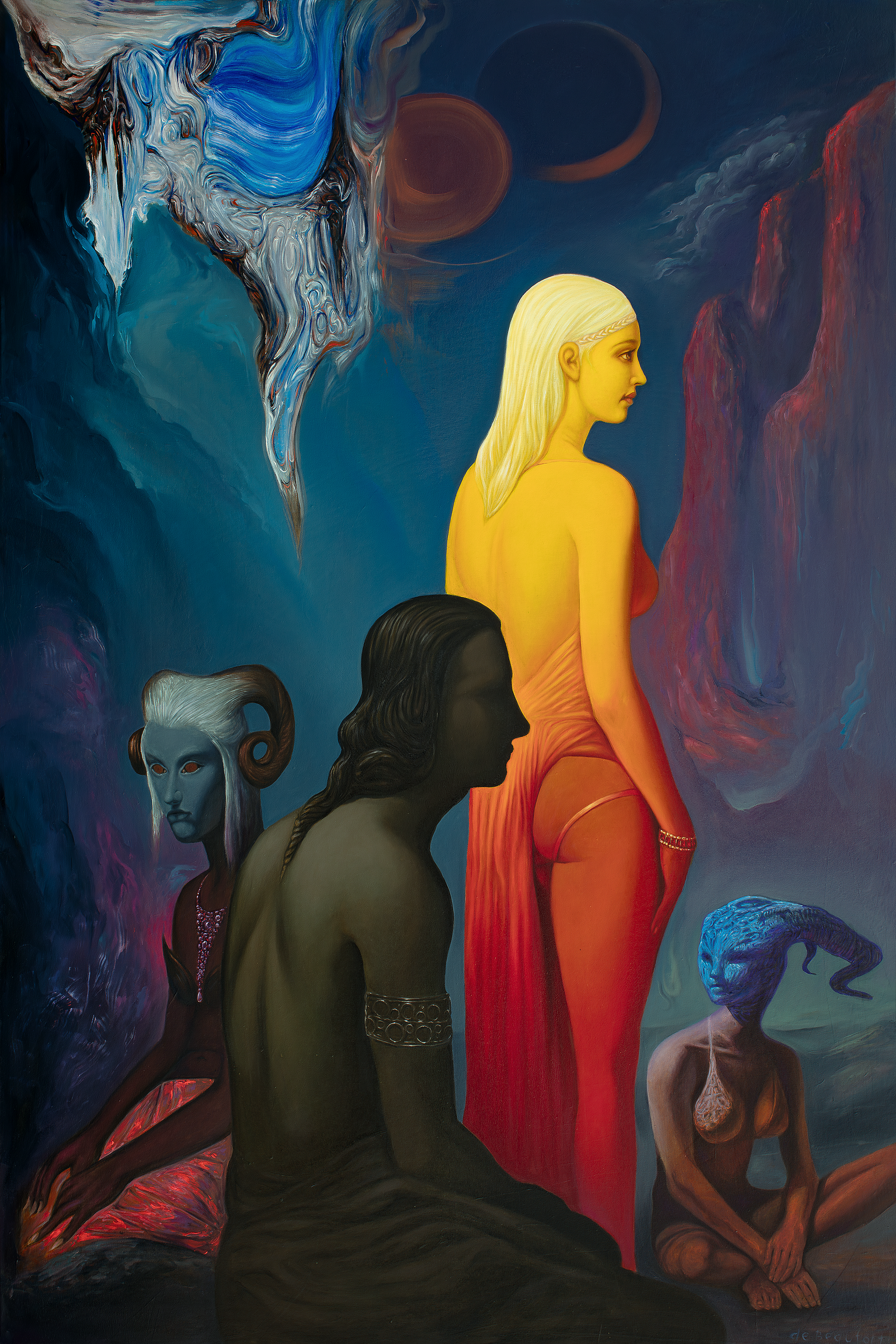
"Progenitors", 2026 Jacques de Beaufort Oil on linen | 48 × 72 inches
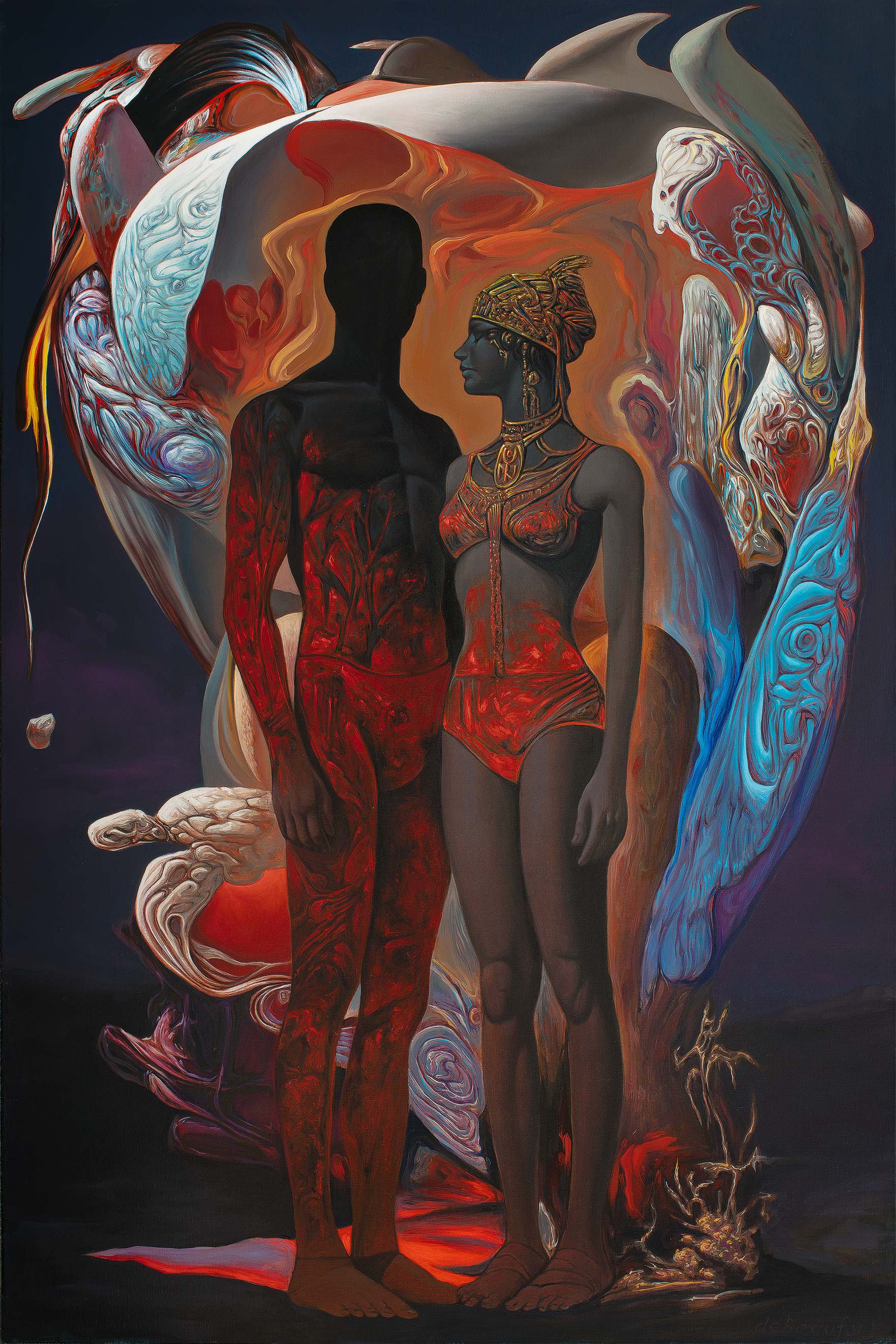
"Children of Khaos" oil on linen 48"x72" 2026
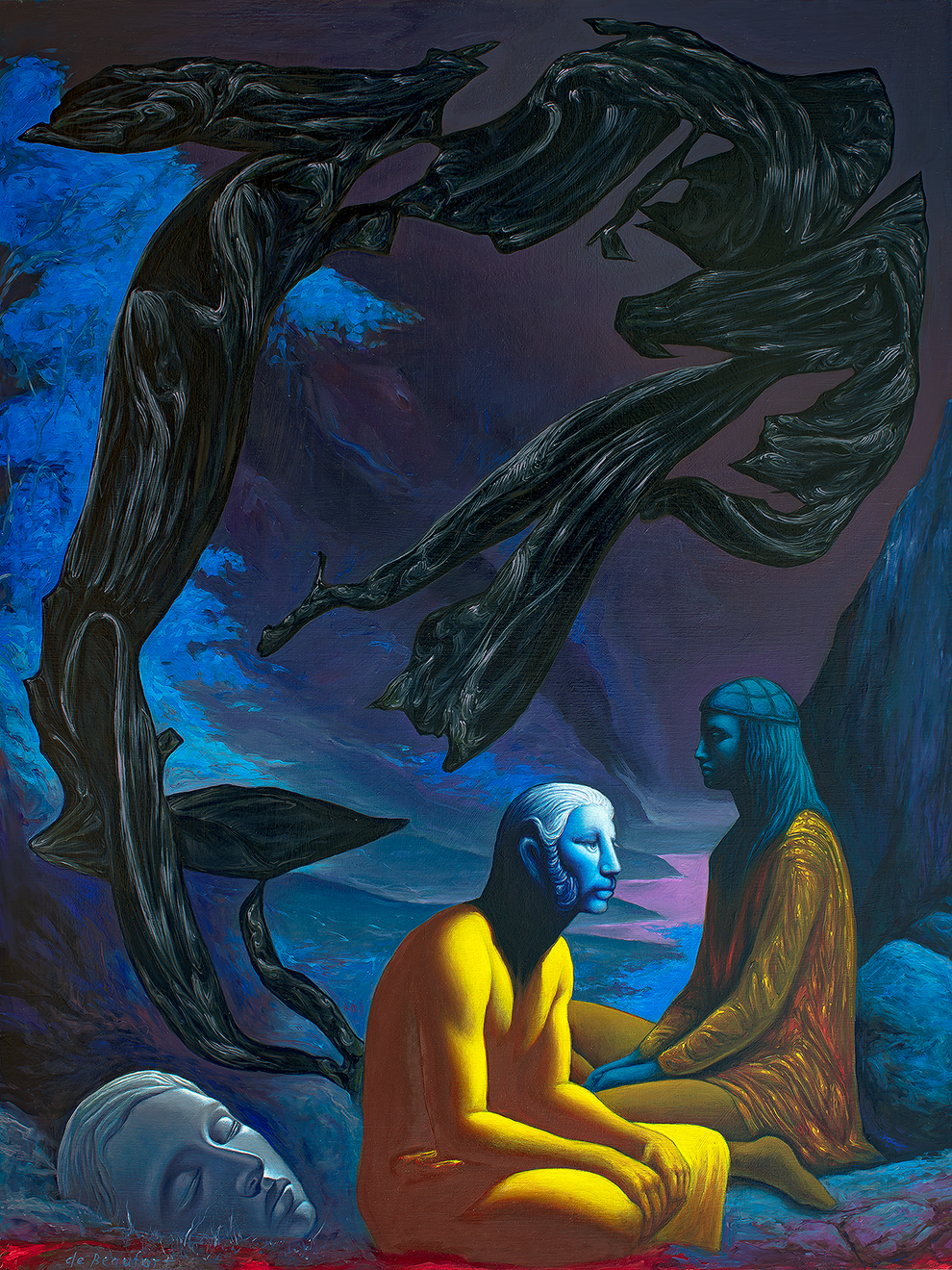
"Dark Energies" oil on linen 36"x48" 2026
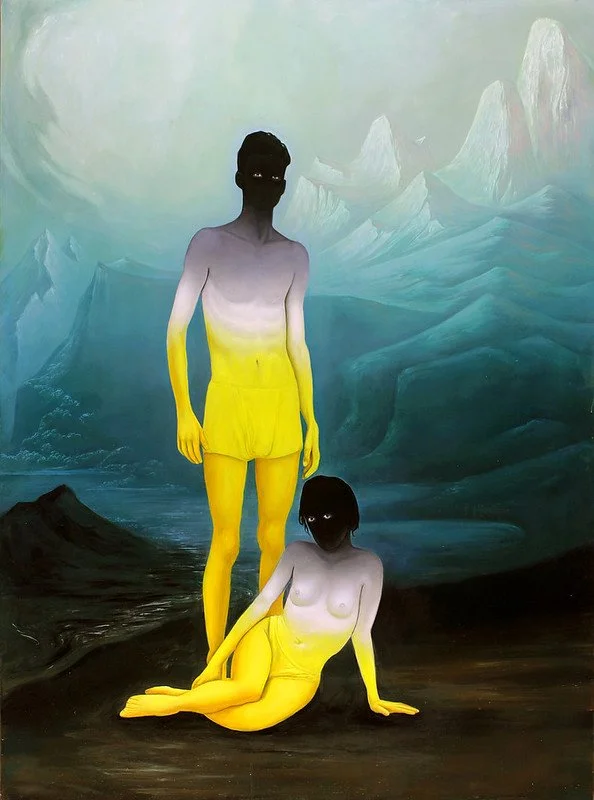
"Pale Yellow Hominids" 2017 oil on panel 48"x65"
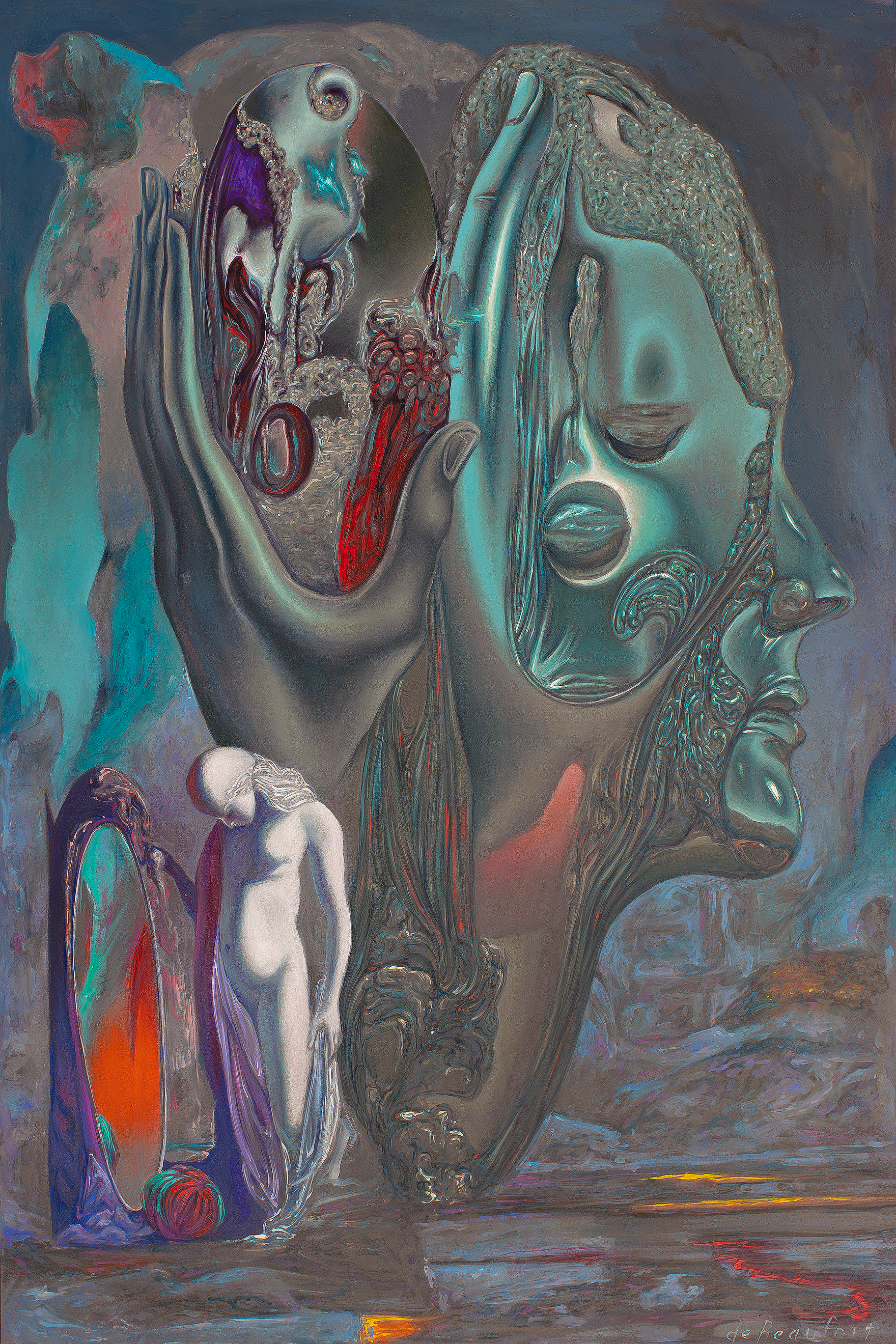
"Urania's Dream" 2026 oil over pastel pencil on panel 24"x36"
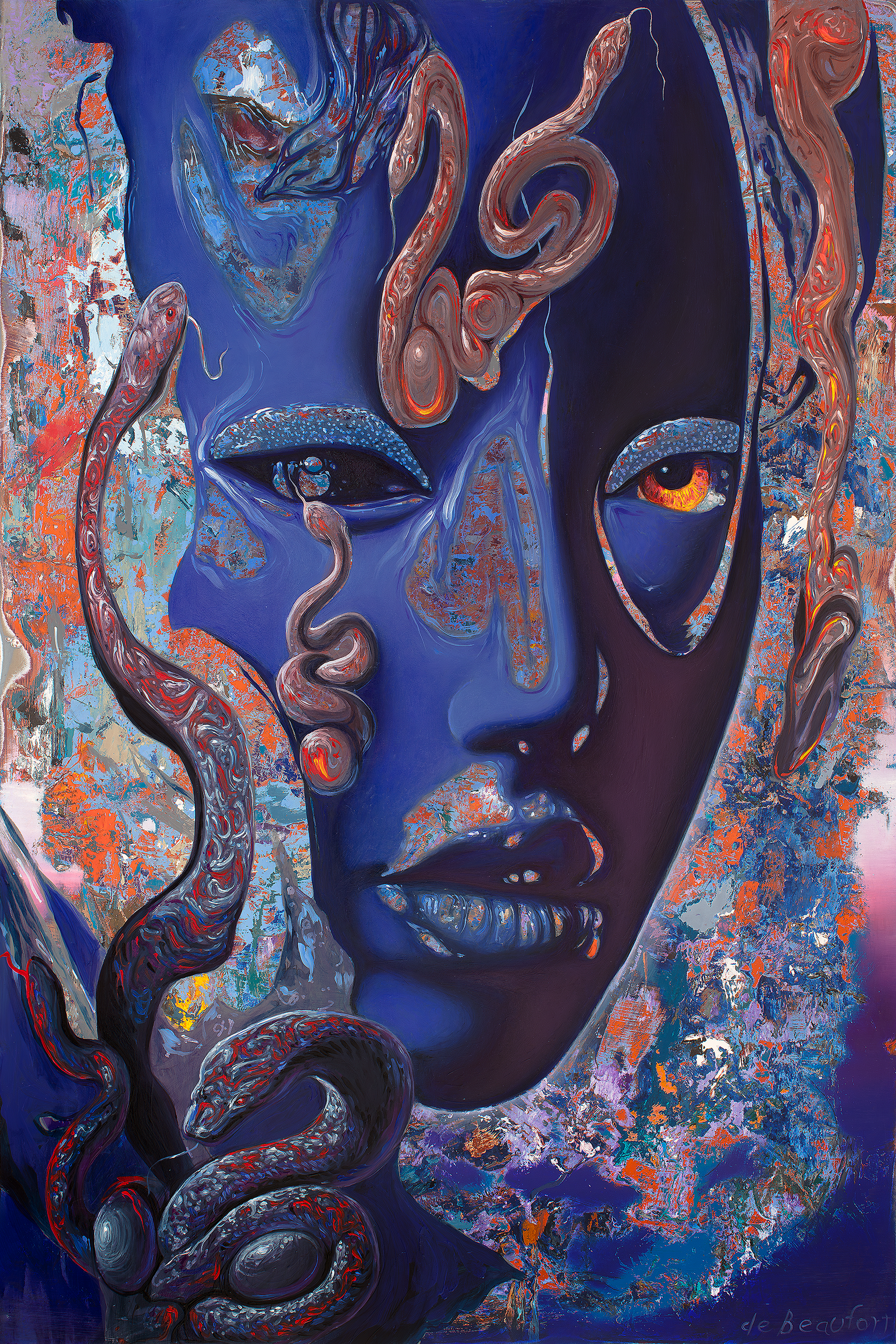
"Medusa" 2026 oil on panel 24"x36"
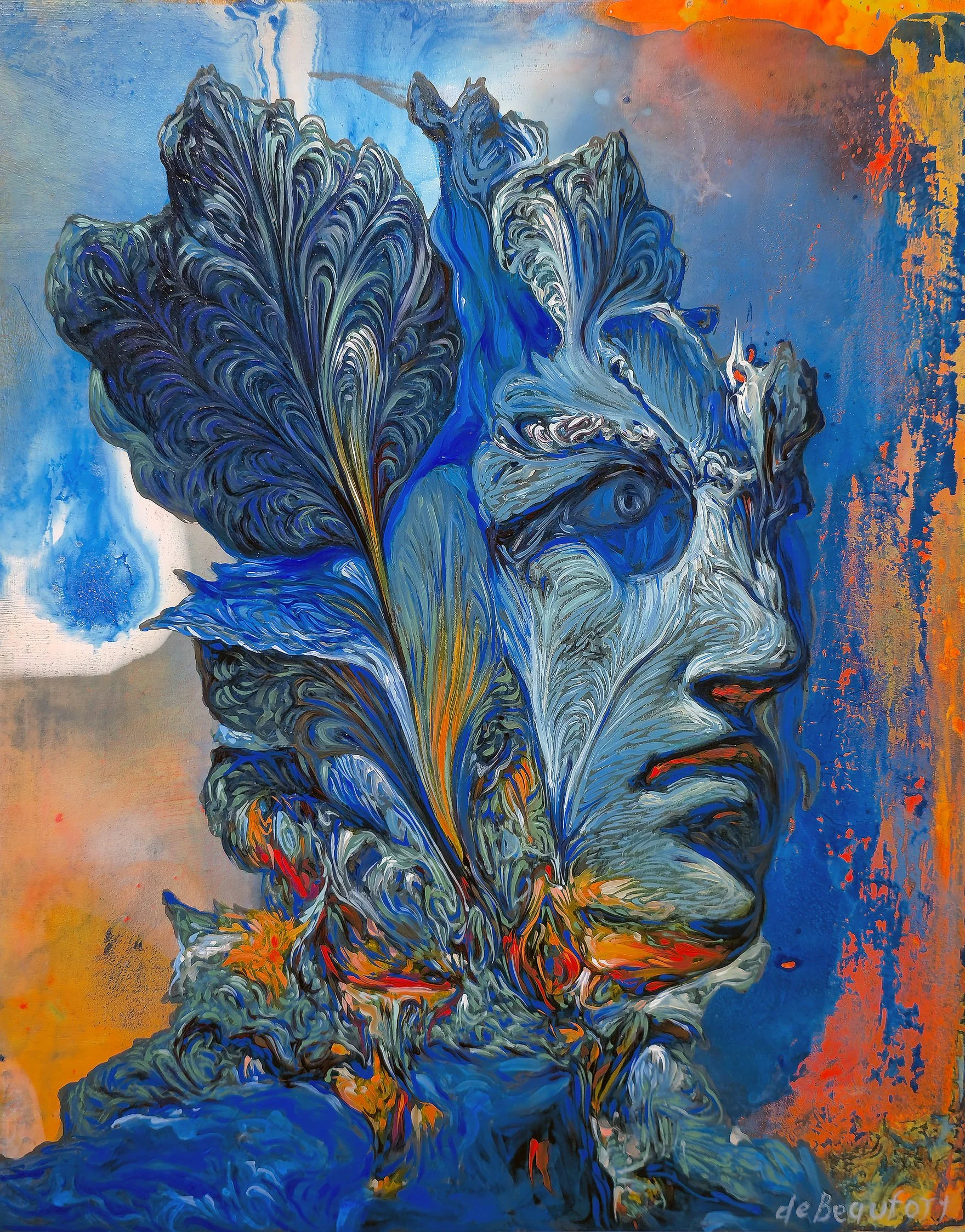
"Green Man #1" 2026 oil and acrylic on panel 16"x20"
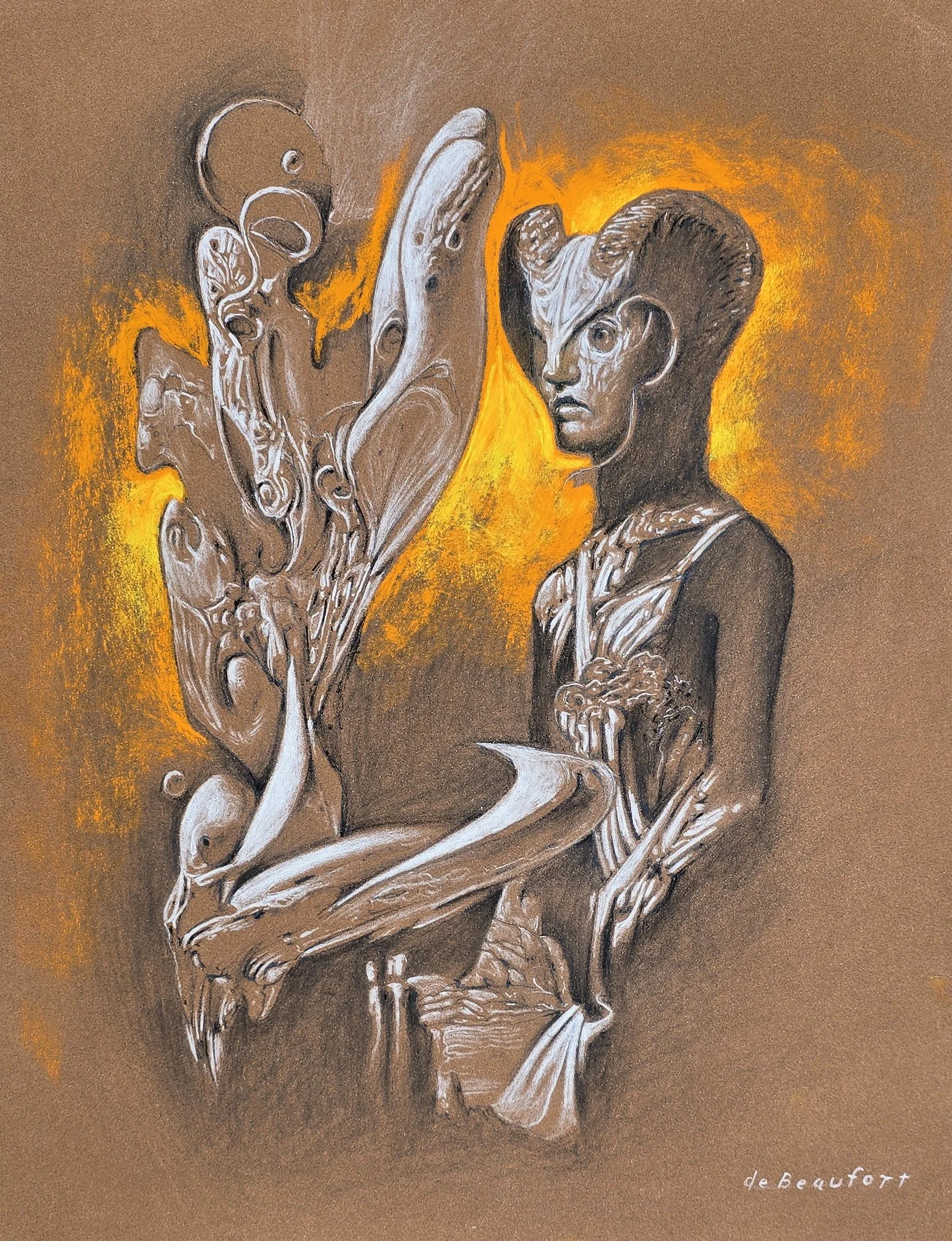
"Progenitor #1" 19"x25" pastel and pencil on la carte paper
The First and Fallen Things
Jacques de Beaufort | Artist Statement
The First and Fallen Things explores the mysterious threshold between spirit and matter, unity and multiplicity, creation and dissolution. Drawing upon ancient cosmogonies, Neoplatonic philosophy, Gnostic mythology, and the visionary Romanticism of William Blake and Percy Bysshe Shelley, these paintings imagine a primordial world inhabited by beings suspended between the divine and the earthly.
At the heart of this body of work lies a reconsideration of the Fall—not as a moral transgression or divine punishment, but as the generative act through which undifferentiated Being enters the world of form. In this conception, creation itself is a kind of metaphysical rupture: the Infinite fragments into countless finite expressions, each carrying within it an obscure memory of its original unity.
The figures that populate these paintings are neither gods nor mortals, neither wholly innocent nor corrupted. They inhabit an ambiguous realm of metamorphosis, where beauty and monstrosity, tenderness and terror, the sacred and the profane coexist without contradiction. Their strange anatomies, ceremonial gestures, and enigmatic relationships suggest fragments of a forgotten mythology, or perhaps visions of an interior world older than consciousness itself.
The paintings also embrace the Romantic conception of the sublime, in which beauty is inseparable from mystery, longing, and the terrible grandeur of existence. Their luminous bodies and dreamlike environments evoke a universe in which matter is not merely the prison of spirit, but its necessary revelation.
Ultimately, The First and Fallen Things proposes that the descent into material existence is neither simply tragic nor redemptive, but an essential mystery of becoming. Through the proliferation of forms, the experience of desire, and the transience of embodied life, the Infinite encounters itself in ways that primordial unity could never permit.
The Fall is thus reimagined not as the loss of paradise, but as the birth of possibility: the moment when eternity, divided into innumerable forms, first becomes capable of beholding itself.